
If you’ve spent any time talking to neighbors or scrolling through local community groups from East Van to North Vancouver lately, you already know that heat pumps are the biggest topic in home improvement.
With our coastal summers getting noticeably hotter and municipal carbon rules shifting across the Lower Mainland, a lot of homeowners are looking at their aging mid-efficiency gas furnaces or expensive electric baseboards and wondering if it’s time to make the switch.
Because a heat pump handles both heating in the winter and high-efficiency cooling in July, it effectively replaces both an old heating source and a standalone AC unit in one shot.
But if you’ve already started calling local mechanical shops, you’ve probably noticed that the pricing feels completely all over the map. Let’s bypass the polished sales pitches and look at what a real heat pump installation actually costs in Metro Vancouver right now, where the hidden fees hide, and how to maximize local rebates without cutting corners.
The Price Tag: 2026 Reality Check
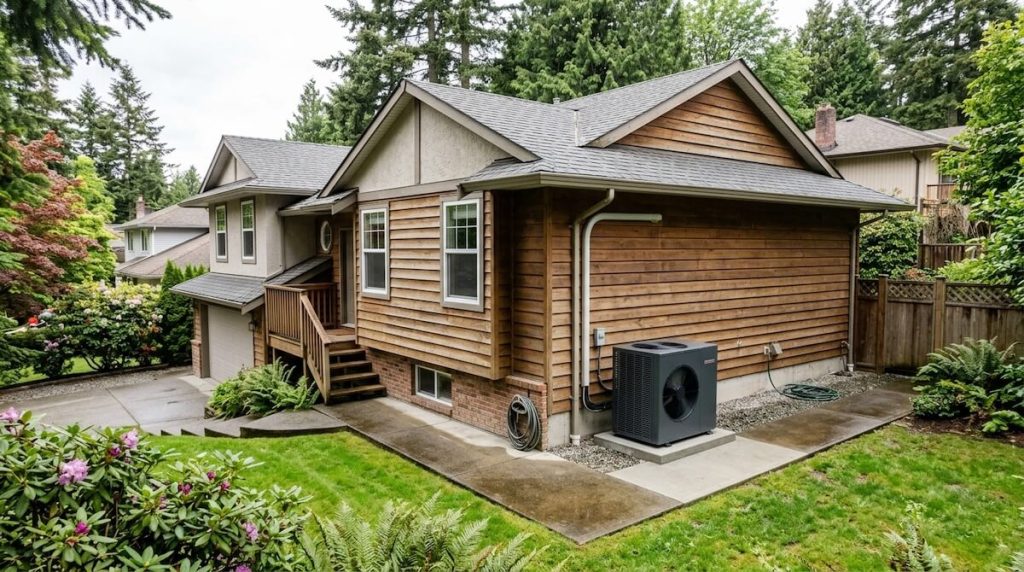
In the Vancouver market, a professional residential heat pump installation generally lands anywhere between $4,000 and $17,000 before rebates.
Where you land on that spectrum depends heavily on the footprint of your house—specifically, whether you already have central ductwork or if you need separate wall-mounted “heads” installed in individual rooms.
Here is how the numbers shake out across the Lower Mainland right now based on real system setups:
| System Configuration | Average Installed Cost (Before Rebates) | Expected Local Rebates (Standard Stream) | Net Out-of-Pocket Range |
| Single-Zone Mini-Split (1 outdoor unit + 1 indoor wall head; ideal for laneway houses, small condos, or modern additions) | $4,000 – $6,500 | $1,000 – $1,500 | $2,500 – $5,000 |
| Multi-Zone Ductless System (1 outdoor unit + 2 to 4 indoor heads; best for older character homes without ducts) | $7,500 – $14,000 | $1,500 – $4,000 | $6,000 – $10,000 |
| Central Ducted System (Small/Mid Home) (Hooks directly into your existing forced-air ductwork, under 2,000 sq ft) | $8,500 – $12,500 | $3,000 – $4,000 | $4,500 – $8,500 |
| Central Ducted System (Large Home) (Premium variable-speed unit for homes between 2,000 and 3,500 sq ft) | $12,000 – $17,000 | $3,000 – $4,000 | $8,000 – $13,000 |
3 Local Hidden Upgrades That Can Bump Your Quote
When a residential estimator comes to your house, the baseline equipment cost is only part of the math. In Vancouver, there are three common structural and technical hurdles that can add sudden labor and material costs to your initial estimate:
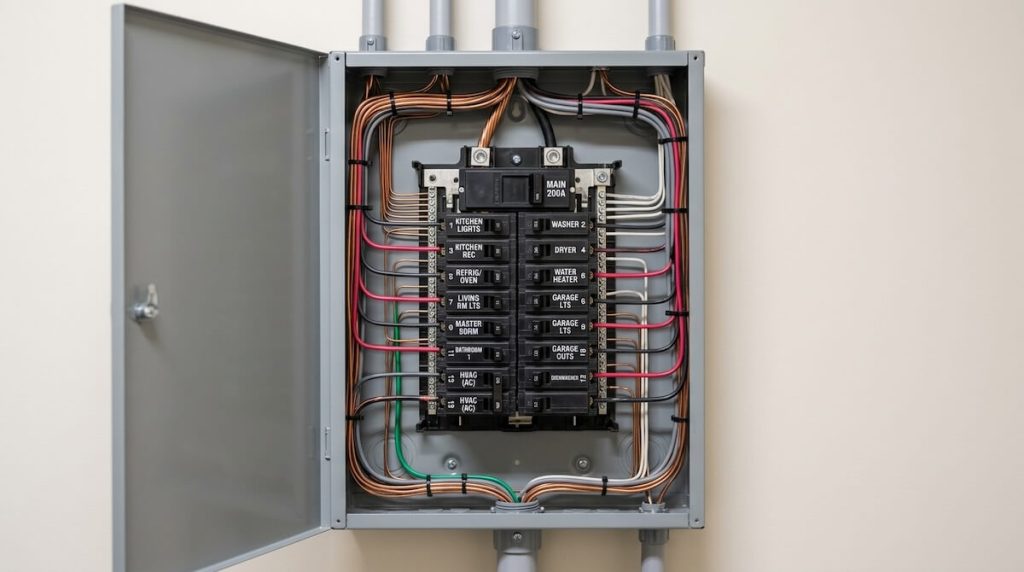
1. The 100-Amp Electrical Panel Bottleneck
If your home was built before the 1990s (highly common across Burnaby, Coquitlam, and East Vancouver), you likely have a 100-amp electrical panel. Modern heat pumps require a heavy-duty, dedicated 240V circuit. If your electrical panel is completely maxed out, you will need to upgrade your home to 200-amp service. Expect a licensed electrical subcontractor to charge between $2,500 and $4,500 to coordinate this upgrade and line connection with BC Hydro.
2. Tight Lot Lines and Noise Bylaws
The City of Vancouver has exceptionally strict municipal noise bylaws regarding where an outdoor condenser unit can sit relative to property lines. If your unit sits in a narrow side-yard close to a neighbor’s window, it legally cannot exceed specific decibel limits. To meet code, your installer may need to mount the unit on specialized vibration-absorbing rubber pads or install a custom acoustic sound blanket, adding $200 to $500 to the job.
3. Static Pressure and Duct Modifications
If you are putting a new, high-airflow central heat pump onto thin metal ductwork built in the 1960s or 70s for an old oil burner or low-pressure gas furnace, the ducts might be too restrictive. If the air can’t move freely, the system will work twice as hard and burn out early. Modifying the main plenum (the metal air trunk right above your air handler) usually adds $600 to $1,500 in specialized sheet metal labor.
Pro Tips on How to Save Money
When it comes to heating and cooling, trying to find the absolute lowest “cash price” from an uncertified installer is a massive trap. If the refrigerant lines aren’t vacuumed correctly, or the system is sized by guesswork, you’ll end up with massive BC Hydro bills and a dead compressor in five years. Instead, use these strategic moves to keep your costs down safely:
Drop the “Cold Climate” Surcharge if You Don’t Need It
Some sales reps will aggressively push ultra-expensive “Cold Climate” or “Hyper-Heat” models designed to push out heat at −25∘C. But let’s look at our actual weather: Metro Vancouver rarely drops below −5∘C for more than a few consecutive days a year. A standard, high-quality variable-speed inverter system from reputable brands like Daikin, Mitsubishi, or Bryant will handle our coastal winters perfectly without paying the premium cold-weather equipment markup.
The HPCN Rule is Absolute
To get a single dollar back from BC Hydro or CleanBC, your installation company must be an approved, registered member of the Home Performance Contractor Network (HPCN). If you hire a generic handyman or an uncertified technician, you might save a few hundred bucks on upfront labor, but you will completely forfeit your $4,000 whole-home rebate check. Always ask to see their active HPCN credentials before signing a contract.
Look Into the CleanBC Energy Savings Program (Income Tiers)
If your combined household pre-tax income falls below certain levels (for instance, under $124,358 for a two-person household), you may qualify for the provincial Energy Savings Program. This tier provides enhanced support that can cover up to 100% of the project cost, with maximum caps ranging from $5,000 to $19,000 depending on your current heating fuel. Furthermore, for these income-qualified streams, the property’s BC Assessment value must generally be under $1.2 million to $1.82 million depending on the exact coverage level.
Is it a Smart Move?
If your home is currently running on old electric baseboards (which are incredibly expensive to operate) or an aging mid-efficiency gas furnace that is pushing 15 years old, a heat pump upgrade is highly worth it.
By combining the baseline $4,000 BC Hydro whole-home rebate with a properly sized system, you can transition your house into a fully air-conditioned, climate-controlled space for roughly the same net investment as installing a basic standalone AC unit. Just make sure to get three itemized quotes from verified HPCN installers before you make your final choice.